eDash sizes the system, reads live data from your inverters, and tells your technician what broke and how to fix it.
1DesignPick a site on the map. eDash sizes the system, estimates how much it will produce and writes the feasibility study (pre-FS). For diesel sites, it ranks which plants to replace first.
2ConnecteDash reads live data from your inverters, loggers and CSV exports. You see what the plant should produce next to what it really produces.
3FixWhen output drops, eDash flags it by clear rules, ranks the most likely causes and sends your technician a ticket with the steps to fix it.
Maintenance shouldn’t mean guesswork
Every brand has its own portal and its own alarms. Your technicians lose hours finding the one that matters.
Without eDash
Days of portal hunting and a site visit before anyone knows the cause
With eDash
eDash ranks the likely causes and opens a ticketYour technician gets the steps on Telegram
A login for each brandOne login for every site
Faults found lateFaults ranked by likely cause
Performance worked out by handPerformance measured for you
Reports pulled from each portalMonthly reports sent for you
A feasibility study shouldn’t take two weeksA solar pre-FS in 5 minutesWhich diesel plants to replace first, then a bank-ready pre-FS
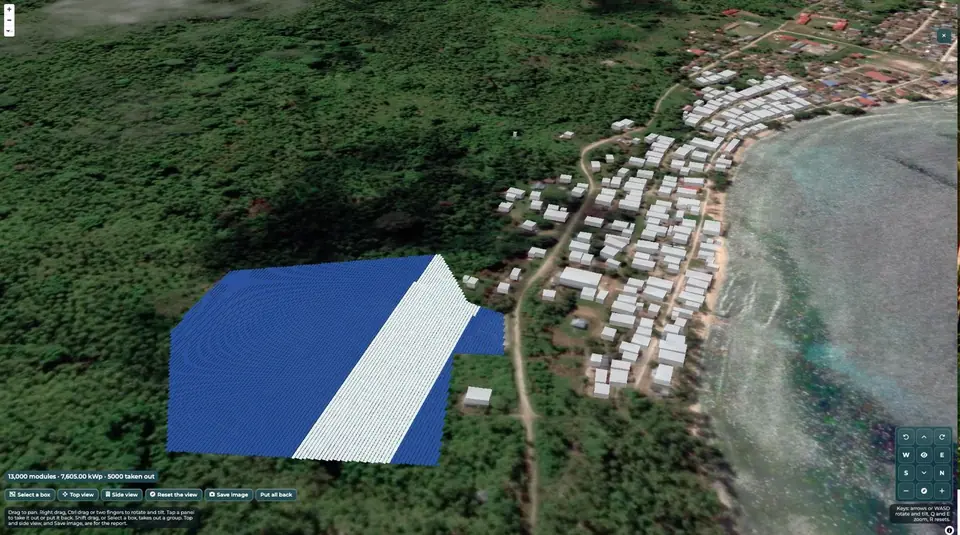
Pick a site on the map. eDash pulls the ESDM One Map layers and the delivered diesel price, sizes the system with equipment from your own vendors and runs the economics. The bilingual pre-FS report is ready to download in minutes.
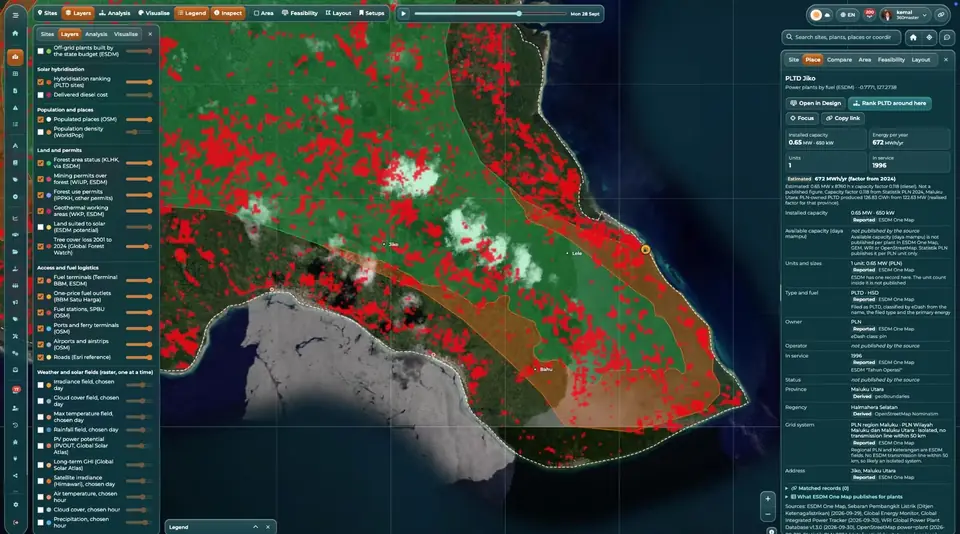
Forest status and permits
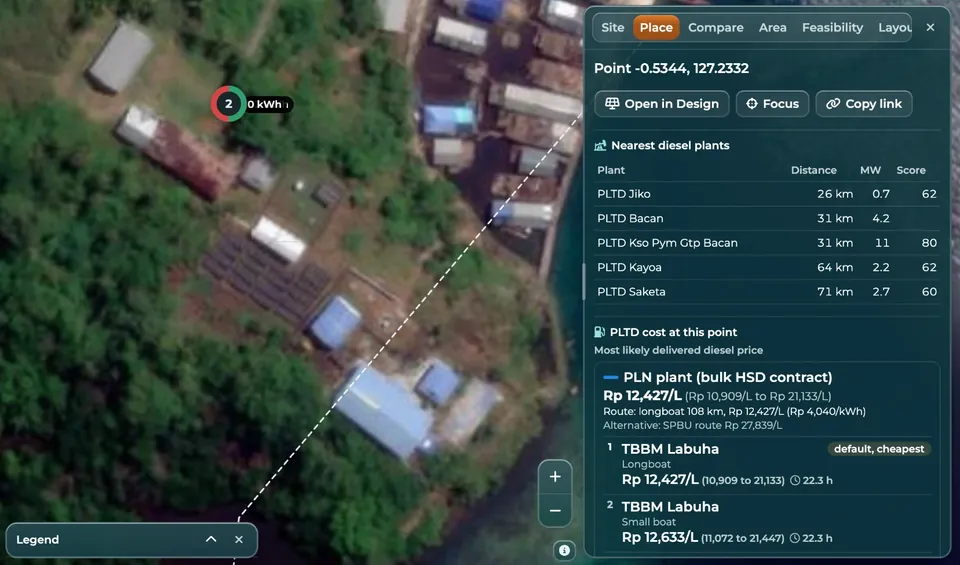
Delivered diesel price, by route
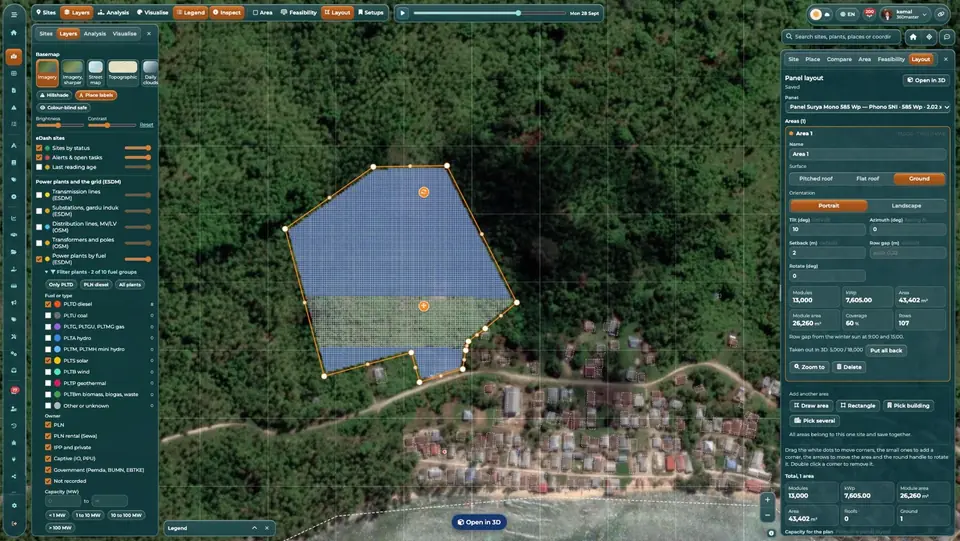
13,000 modules, 7,605 kWp
5,000 modules taken out in 3D
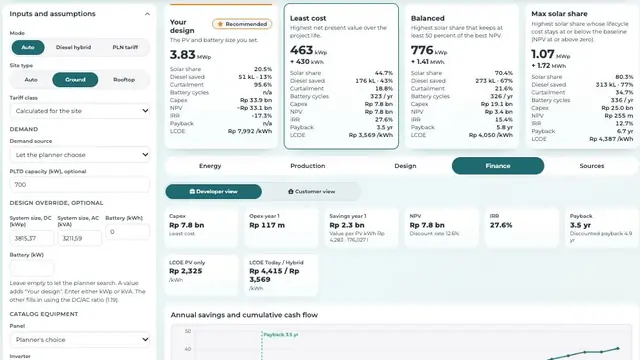
IRR 27.6%, payback 3.5 years
Forest status, permits, land use plans and the nearest grid, pulled from national and regional government data.
The delivered price at every PLTD, from the fuel terminal by road, river or sea, with your own freight and handling costs.
Draw the area or pick a roof. Module count, kWp, tilt and row spacing are sized from equipment your vendors supply, as you go.
Pull out rows shaded by buildings or trees, then get PVsyst-grade yield with P50 and P90 in the same tool.
Least cost, balanced and max solar, each with NPV, IRR, payback, LCOE and P50/P90 yield. Switch between the developer and customer views.
Your vendors’ prices in the BOMYour module, inverter and battery prices and datasheets feed the BOM, so the capex matches your quote.
Yield that holds up in reviewSoiling, temperature and degradation losses modelled at PVsyst grade, with P50 and P90 yield in the pre-FS report.
Hands off to PVsystExport the weather year, PAN, OND, horizon and results to PVsyst for the bankable detail.
What it means for you
Higher productionFaults are found by rule and fixed faster, so your panels deliver more kWh.
More savingsEvery extra solar kWh is power you don’t have to buy.
Lower energy spendingLess grid and diesel power to pay for.
See eDash at work
From the map to one site’s data in two clicksEvery incident comes with its likely cause and a maintenance ticket
Realize the full savings your solar was built forUp to 90%Your system is designed to cut the bill by up to 90%. eDash keeps it producing at full output so you actually get there.$2,375.75 → $221.05
*Simulated example. A 32 kW DC rooftop system on a Massachusetts restaurant, about 38,500 kWh a year, offsetting about 91% of its electricity use. Commercial G-3 rate. Estimated payback 4.2 years after the federal ITC, MACRS depreciation and the Massachusetts SMART incentive. Actual results vary with roof orientation, shading and utility tariffs. Not financial or tax advice.
Any system, any scale
From one small roof to many sites, eDash works for all of them.
Large rooftop array
Metal roof
Flat roof, split arrays
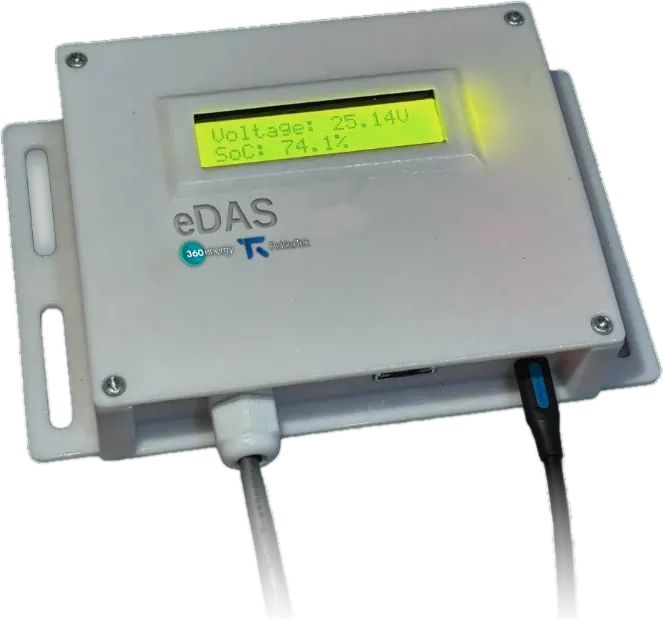
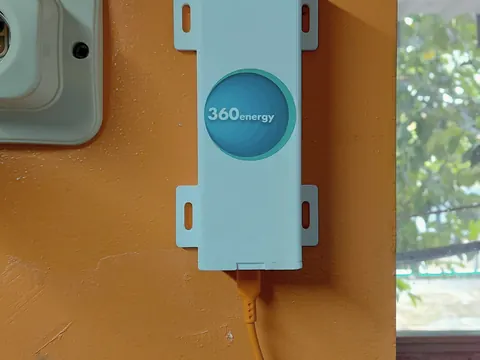
eDAS
Brand Agnostic Data Acquisition System
eDAS specifications
Specification
Detail
Processor
Dual MCU 72MHz + 240MHz
Power Supply
220VAC 2W
Enclosure
IP67 Dust & Water Resistant
Operating Temperature
-40°C to +85°C
Mounting
Rugged 4-point bolt mount
Fits your existing panelA small box that fits in your existing panel
Weather-resistant designIP67 rating and wide temperature range ensure stable performance in heat, rain, and dust
Fast processingDual-processor handles local data processing to detect and flag battery issues instantly


















 Portable battery, over MQTT